

Ransomware
Attacker’s Top Choice for Cyber Extortion
Ransomware is one of the most active and profound threats facing organizations today, of all industries and sizes. Years after Wannacry attacks shuttered businesses across the globe, stealthy ransomware infections continue to dominate headlines and business discussions.
The term ransomware refers to the malware used for encrypting files and entire systems however it has largely transformed to indicate a category of financially motivated attacks by leveraging victim extortion.
The impact of a successful ransomware deployment includes both technical and non-technical challenges and can be crippling to business operations. Modern day attackers have developed advanced techniques that now require a holistic security risk mitigation strategy from the board to practitioners.
On Demand Webinar
Proactive Solutions to Stop Modern Ransomware in its Tracks
Holistic Security Risk Mitigation Strategy

How We Can Help
Mandiant possesses incident response, threat intelligence and managed detection and response expertise that equips us with a deep understanding of how ransomware operators gain initial access, compromise credentials, and laterally move to stage and deploy ransomware for mass impact.
Mandiant offers ransomware solutions that bolster both your preparedness and your defenses to mitigate this proliferating attack vector. With our proactive assessments, response and remediation services, system hardening guidance, and threat hunting techniques, we help you outmaneuver ransomware attackers and stop them in their tracks.
Ransomware Attack Trends
The Evolution of Ransomware
The emergence of ransomware threats began in 2013 with CryptoLocker being the first form of this increasing threat today. Attackers are continuously adapting their methodologies from a distribution perspective, along with mimicking the tactics of one another to find which approach is most profitable.

Hear our expert discuss the history of ransomware from the emergence of this threat to modern day attack activity.
Ransomware Intrusion Activity
Ransomware involves a sophisticated collaboration of threat actors (actual people behind their keyboards) across an attack lifecycle. Who are these specific individuals behind the operation? Modern day ransomware has become to mirror an assembly line, with various people involved in different phases of the attack.
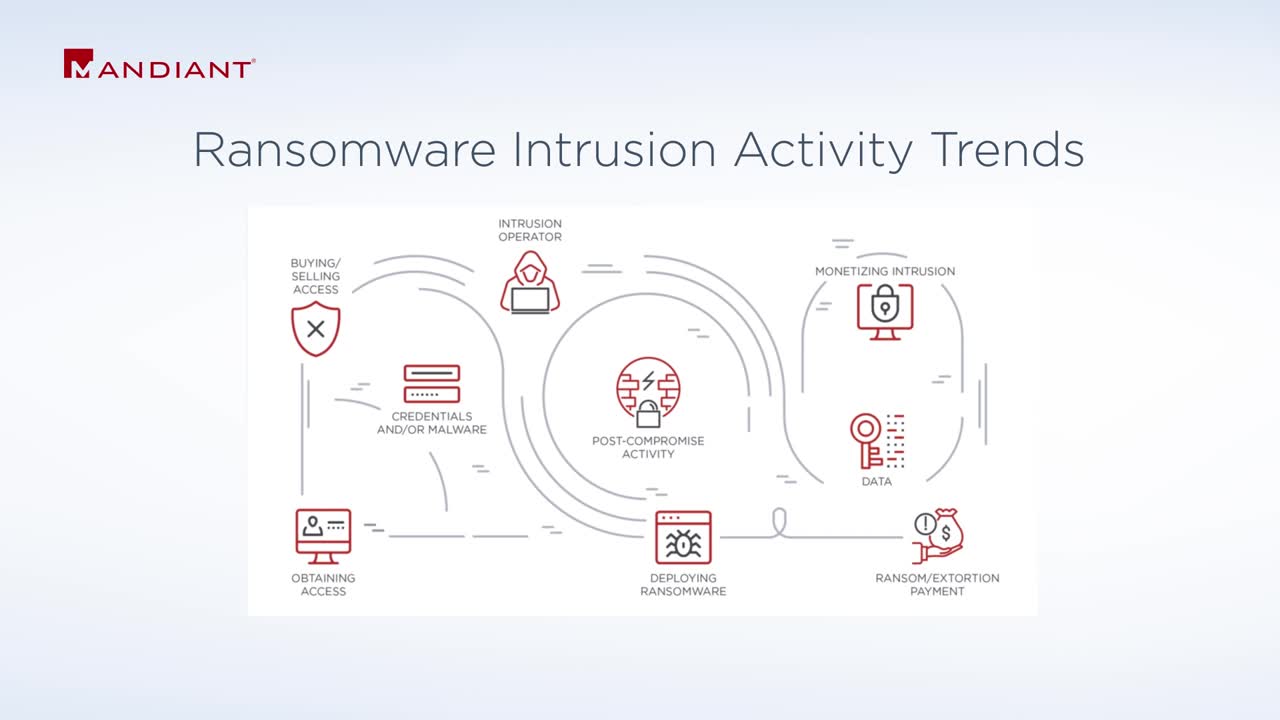
Hear our expert describe intrusion activity around the MAZE ransomware attack.

Ransomware Defense Assessment
Evaluating your security team’s ability to prevent, detect, contain, and remediate a modern ransomware attack before it creates costly harm.

Threat Intelligence
Arming organizations with knowledge of ransomware attackers and other threats, through threat intelligence services.

Managed Defense
Helping your security team protect against advanced threats, like ransomware, with frontline threat hunting expertise.

Security Validation
Testing your defenses against ransomware threats by measuring the effectiveness of your security controls with real attacks.

Expertise On Demand
Providing expertise and intelligence to help you combat ransomware and other harmful threats.
Key incident response ransomware data points
The following trends are commonly seen by our frontline incident response experts when investigating and remediating ransomware.
Median Dwell Time for Ransomware Attacks (in Days)

The median dwell time for ransomware attacks is 72.75 days, in comparison to all threats at 56 days (including ransomware).
Popular Days of the Week for Ransomware Deployment

Days of the week highlighted above represent when deployment and execution of the ransomware attack begins, not when the attacker gains initial access.
Mandiant Managed Defense: Minimize Risk and Reduce Ransomware Dwell Time

Mandiant Managed Defense focuses on attacker behavior to reduce the average dwell time of a strategic ransomware actor from 72 days to only 24 hours or less.
Common Ransomware Types and Deployment Methods
Three Types of Ransomware
- Indiscriminate attacks that leverage a self-propagation or worm-like capability to continually redeploy malware.
- Targeted attacks manually executed by criminal organizations and more sophisticated threat actors that typically follow the attack lifecycle and often leverage trusted applications that live in the customer environment to reduce risk of detection (i.e., PSEXEC, Powershell).
- Ideologically motivated attacks with the purpose to cause significant business disruption, but not a deep interest of collecting payment.
Top Deployment Methods
- PsExec
- Manual
- Installed Service
- Manual via RDP
Related resources
Case Study
Modern Ransomware and Incident Response Solutions
FireEye Chat
FireEye Chat:
Front and Center on Ransomware
Datasheet
Ransomware Defense Assessment
Solution Brief
Mitigation of Strategic Ransomware Threats with Mandiant Managed Defense
News Article
The FBI Botched Its DNC Hack Warning in 2016—but Says It Won’t Next Time

Ransomware Blog Posts
February 25, 2021
So Unchill: Melting UNC2198 ICEDID to Ransomware OperationsFebruary 22, 2021
Cyber Criminals Exploit Accellion FTA for Data Theft and ExtortionOctober 29, 2020
Ransomware: The Threat We Can No Longer Afford to IgnoreOctober 28, 2020
Unhappy Hour Special: KEGTAP and SINGLEMALT With a Ransomware Chaser
Ready to get started?
Our security experts are
standing by to help you with an incident or answer questions about
our
consulting and managed detection and response services.